

10 Signs Your Skin Barrier Is Damaged And How to Repair It Fast
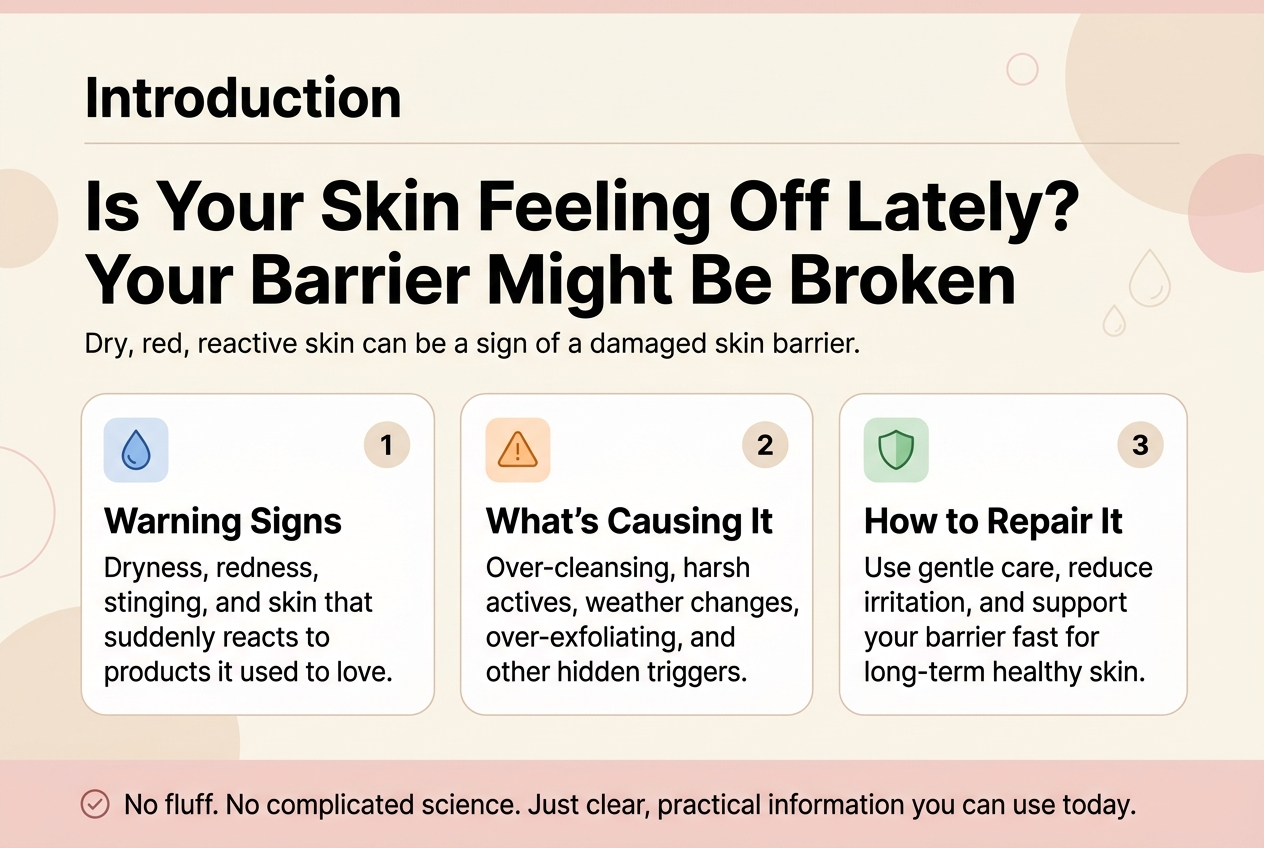
Is Your Skin Feeling Off Lately? Your Barrier Might Be Broken
If your skin is suddenly dry, red, or reacting to products it used to love, your skin barrier is probably damaged and you're not alone. This is one of the most common (and most overlooked) skin problems out there.
This guide is for anyone dealing with sensitive, irritated, or unpredictable skin who wants real answers, not a 10-step routine that costs a fortune.
What you'll find inside:
How to spot the warning signs of a damaged skin barrier before things get worse
What's actually causing the damage some of the triggers might genuinely surprise you
Simple, effective ways to repair your skin barrier fast and keep it healthy long-term
No fluff, no complicated science. Just clear, practical information you can actually use starting today.
What Your Skin Barrier Does and Why It Matters
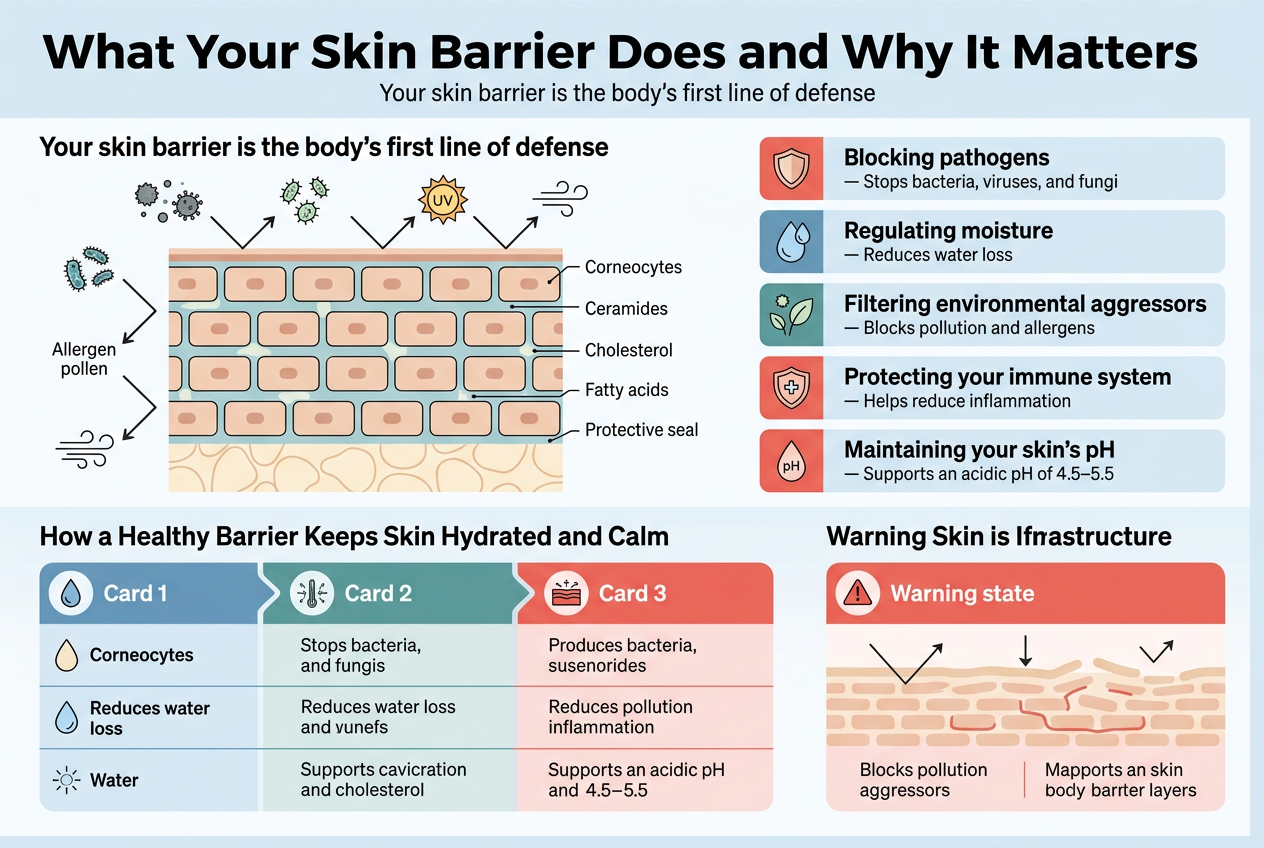
The Role of the Skin Barrier in Protecting Your Health
Your skin barrier is essentially your body's first line of defense against everything the outside world throws at it pollution, bacteria, allergens, UV radiation, harsh weather, and more. Think of it like a brick wall. The "bricks" are your skin cells (called corneocytes), and the "mortar" holding them together is a mixture of lipids ceramides, cholesterol, and fatty acids. Together, they form a tight, protective seal that keeps harmful things out and the good stuff in.
But the job of the skin barrier goes way beyond just looking pretty. Here's what it's actively doing for you every single day:
Blocking pathogens: Bacteria, viruses, and fungi are constantly looking for a way in. An intact skin barrier stops most of them before they cause any trouble.
Regulating moisture: It controls how much water evaporates from your skin, keeping your body properly hydrated at a cellular level.
Filtering environmental aggressors: Pollution particles and allergens that would otherwise irritate your skin are kept at bay.
Protecting your immune system: A healthy skin barrier reduces the need for your immune system to go into overdrive, which means less inflammation and fewer allergic reactions.
Maintaining your skin's pH: Your skin has a naturally acidic pH (around 4.5 to 5.5), and the barrier helps keep it there. This acidic environment is hostile to bad bacteria and supports the good microorganisms that belong on healthy skin.
When the barrier breaks down, every single one of these functions gets compromised. That's when things start going wrong redness, irritation, infections, and chronic skin conditions all become much easier to trigger.
How a Healthy Barrier Keeps Skin Hydrated and Calm
A functioning skin barrier is one of the biggest reasons some people wake up with plump, glowing skin while others deal with persistent dryness or sensitivity. The secret comes down to water retention.
Your skin is constantly losing water through a process called transepidermal water loss (TEWL). A healthy barrier dramatically slows this process down. Those lipids the ceramides, fatty acids, and cholesterol act like a waterproof seal. When they're present in the right ratio and quantity, water stays locked inside the skin where it belongs.
Simple way to picture it:
| Skin Barrier Condition | TEWL Rate | How Skin Feels |
|---|---|---|
| Healthy and intact | Low | Soft, plump, calm |
| Mildly compromised | Moderate | Tight, slightly dry, reactive |
| Significantly damaged | High | Rough, flaky, red, easily irritated |
Beyond hydration, a healthy barrier also keeps your skin's inflammatory response in check. When the barrier is strong, irritants don't penetrate deeply enough to trigger a reaction. Your skin stays calm because it's never being challenged. On the flip side, when there are tiny gaps or cracks in that protective seal, even things that shouldn't cause a reaction like a light fragrance or a change in temperature can set off redness, itching, or burning.
This is why people with damaged skin barriers often describe their skin as "sensitive" or "reactive," even if they didn't always have sensitive skin. The barrier is what determines how much external stimuli actually reaches the sensitive nerve endings and immune cells beneath.
Why Damage Happens More Easily Than You Think
Here's what catches most people off guard: you don't need to do anything dramatic to damage your skin barrier. In fact, some of the habits that seem completely harmless or even beneficial are the exact things that quietly wear it down over time.
Your skin barrier is surprisingly vulnerable to everyday factors, including:
Over-washing: Cleansing too frequently strips the natural oils and disrupts the lipid layer. Even water alone, especially hot water, breaks down the barrier if you're in the shower for too long.
Using too many active ingredients: Retinol, AHAs, BHAs, vitamin C these are powerful skincare tools, but layering too many of them, too often, aggressively strips away skin cells faster than your barrier can rebuild.
Low humidity environments: Dry air, especially in air-conditioned offices or heated homes in winter, pulls moisture right out of your skin. Your barrier has to work harder to compensate, and if it's already weakened, it can't keep up.
Skipping sunscreen: UV radiation directly damages the lipid structure of the barrier and breaks down ceramides over time.
Stress: Chronic stress triggers cortisol spikes that suppress ceramide production, literally depleting the building blocks your barrier needs to stay strong.
Dietary deficiencies: Low intake of essential fatty acids, zinc, and vitamins A, C, and E can quietly undermine your barrier's ability to repair itself.
What makes this tricky is that barrier damage is often cumulative. Your skin can handle a certain amount of stress before it starts showing symptoms. By the time you notice visible signs flaking, redness, stinging the damage has usually been building for a while. That's why so many people are dealing with a compromised barrier without even knowing it.
10 Warning Signs Your Skin Barrier Is Damaged
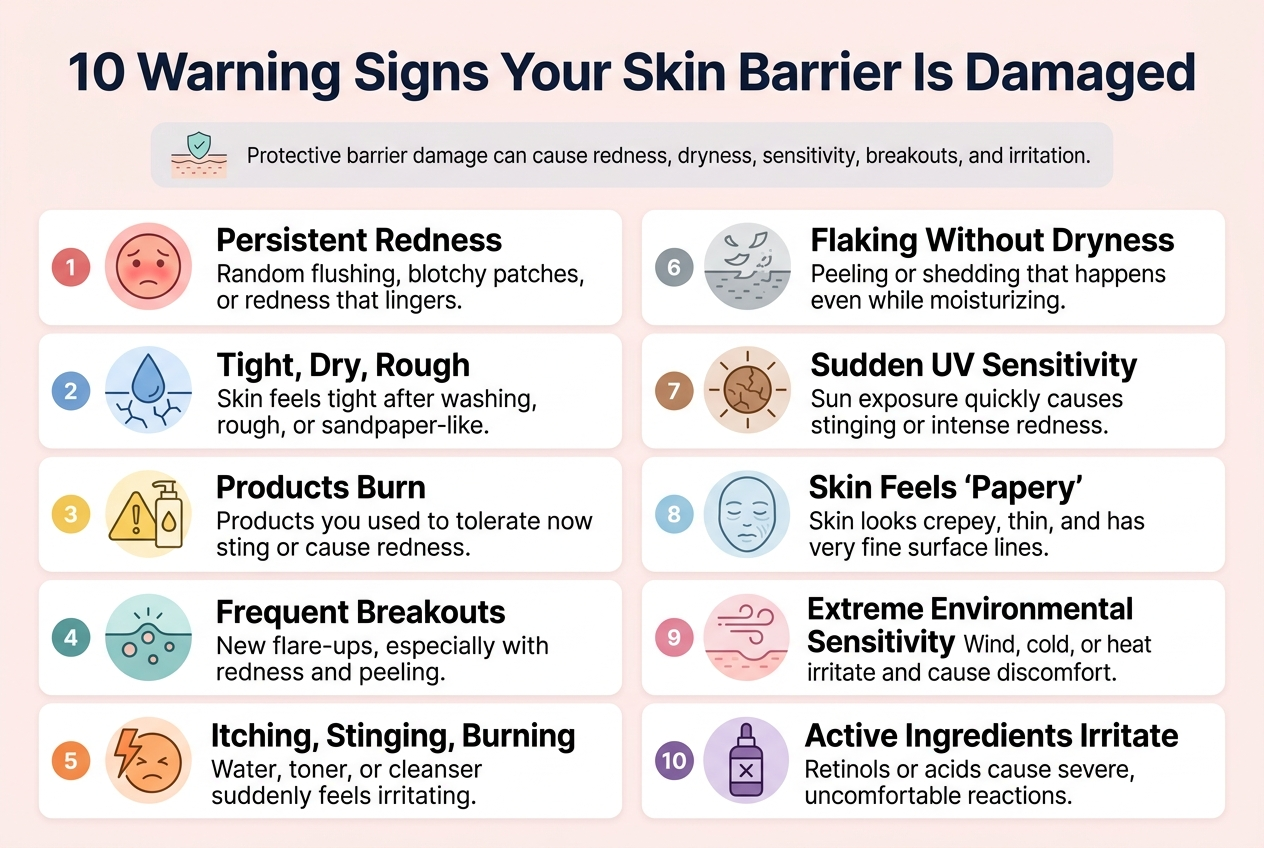
Persistent Redness and Unexplained Irritation
Your skin looks flushed even when you haven't done anything to provoke it. No spicy food, no workout, no extreme temperatures just random redness that sticks around longer than it should. This is one of the earliest and most telling signs that your skin barrier is under stress.
When the barrier is healthy, it acts like a bodyguard. It keeps irritants, pollutants, and bacteria out while holding moisture in. Once that protective layer starts to break down, your immune cells beneath the skin go on high alert. The result? Chronic, low-grade inflammation that shows up as persistent redness or blotchy patches you just can't explain.
What makes this tricky is that many people mistake this redness for rosacea or an allergic reaction when the real culprit is a compromised barrier. You might notice:
Redness that flares up after washing your face
Skin that looks inflamed even after a full night of rest
Patches that feel warm or look irritated without any obvious trigger
Redness that spreads or worsens after applying your usual moisturizer
If your skin has been red and reactive for weeks without any clear cause, the barrier is almost certainly struggling. Slapping on more products at this stage often makes things worse, not better.
Skin That Feels Tight, Dry, or Rough to the Touch
That tight, pulled feeling after cleansing like your skin is two sizes too small for your face is your skin screaming that it has lost moisture it can no longer hold onto. A healthy skin barrier is loaded with natural moisturizing factors (NMFs) and lipids like ceramides, cholesterol, and fatty acids. These work together to keep water locked inside your skin cells.
When the barrier is damaged, water escapes freely through a process called transepidermal water loss (TEWL). The result is that no matter how much water you drink or how thick your moisturizer is, your skin still feels parched.
What to Look and Feel For
| Symptom | What It Means |
|---|---|
| Tightness after washing | Barrier stripped of natural oils |
| Rough or sandpaper texture | Dead skin cells not shedding properly due to dehydration |
| Flaking or peeling without dryness | Compromised lipid layer |
| Dull, gray, or ashy appearance | Low moisture levels reflecting less light |
| Skin that absorbs moisturizer instantly but still feels dry | TEWL happening faster than products can compensate |
Rough texture is another dead giveaway. When skin lacks proper hydration and its lipid structure is off, the surface becomes uneven and bumpy. You might notice this most on your cheeks, forehead, or around your jawline areas that tend to be more exposed to environmental stress.
Increased Sensitivity to Products You Once Tolerated
This one catches a lot of people off guard. You've been using the same cleanser for two years. Same vitamin C serum, same SPF. Then one morning, everything burns. Your skin reacts to products it used to love without any issue, and suddenly your entire routine feels like it's working against you.
This shift happens because a damaged barrier no longer filters out irritants the way it should. Ingredients that your skin once processed without a second thought like fragrance, alcohol, acids, or even some preservatives now penetrate deeper and trigger a reaction. The skin's threshold for tolerance drops significantly when the barrier is weakened.
Common experiences people describe:
A familiar moisturizer suddenly causes stinging or redness
A vitamin C or AHA serum that was fine before now burns on contact
Sunscreen leaves the skin feeling tight and reactive
Even gentle, fragrance-free products cause a reaction
This increased sensitivity can spiral quickly. People often respond by layering on more products to soothe the irritation, which ends up overwhelming an already compromised barrier even more. The smarter move is to strip the routine back to the absolute basics a gentle cleanser, a plain moisturizer, and SPF and let the skin settle before reintroducing anything else.
Frequent Breakouts or Sudden Acne Flare-Ups
A damaged skin barrier and acne might seem like an unlikely connection, but they're deeply linked. When the barrier is compromised, it becomes much easier for acne-causing bacteria like Cutibacterium acnes (formerly known as Propionibacterium acnes) to thrive. On top of that, the inflammation triggered by a weakened barrier creates the perfect environment for clogged pores and angry breakouts.
Here's what makes this particularly frustrating: many people respond to breakouts by reaching for strong acne treatments benzoyl peroxide, salicylic acid, retinoids not realizing that these same products can further damage an already struggling barrier. It becomes a cycle that's hard to break.
Signs Your Breakouts Are Barrier-Related
Pimples appear in new or unusual areas where you don't normally break out
Your skin breaks out and feels dry or flaky at the same time (a classic combination)
Acne flares after introducing a new exfoliating product or over-cleansing
The breakouts are accompanied by redness, sensitivity, or peeling
Breakouts seem to get worse, not better, when you use more active ingredients
Barrier-related breakouts look and behave differently than hormonal or congestion-related acne. They tend to be more widespread, shallower (think surface-level pustules rather than deep cysts), and they come with that uncomfortable mix of oiliness and dehydration at the same time what's often called dehydrated oily skin.
Itching, Stinging, or Burning Without a Clear Cause
Healthy skin doesn't itch randomly or sting when you splash water on your face. If you're dealing with sensations like these without any obvious explanation no new product, no insect bite, no allergic reaction you can trace your barrier is likely the source of the problem.
When the barrier breaks down, the nerve endings just beneath the skin's surface become more exposed and reactive. Tiny gaps in the lipid structure allow environmental irritants, changes in temperature, and even water to reach these nerve endings in ways they never would if the barrier were intact. The result is that burning, prickling, itching sensation that feels completely out of proportion to what's actually touching your skin.
Itching vs. Stinging vs. Burning What Each Suggests:
Itching: Often linked to dehydration, dryness, or conditions like eczema that heavily involve the barrier
Stinging: Usually a sign that active ingredients or irritants are penetrating too deeply a red flag for barrier damage
Burning: Can point to more serious barrier disruption, especially if it happens with plain water or a basic cleanser
One particularly telling sign is what skincare experts call the lactic acid sting test if a diluted lactic acid solution causes significant stinging, it's a reliable indicator that the skin barrier is compromised. Even without formal testing, if your skin stings when you apply your regular toner or serum, that's your skin telling you something is seriously off.
Pay attention to when the sensations happen. Morning vs. evening, after cleansing vs. after moisturizing tracking this can help you pinpoint exactly which step or product is pushing your skin over the edge.
✨ Explore Skin‑Friendly Essentials at PureOnSkin
If you’re ready to support your skin barrier beyond your daily routine, explore our curated collection of soft, breathable clothing and gentle home essentials designed with your skin’s comfort in mind. From ultra‑smooth pillowcases to irritation‑free fabrics, every item is crafted to help your skin stay calm, protected, and glowing.
👉 Shop our skin‑friendly essentials
Give your skin the comfort it deserves starting with the things you use every day.
More Signs You Should Not Ignore
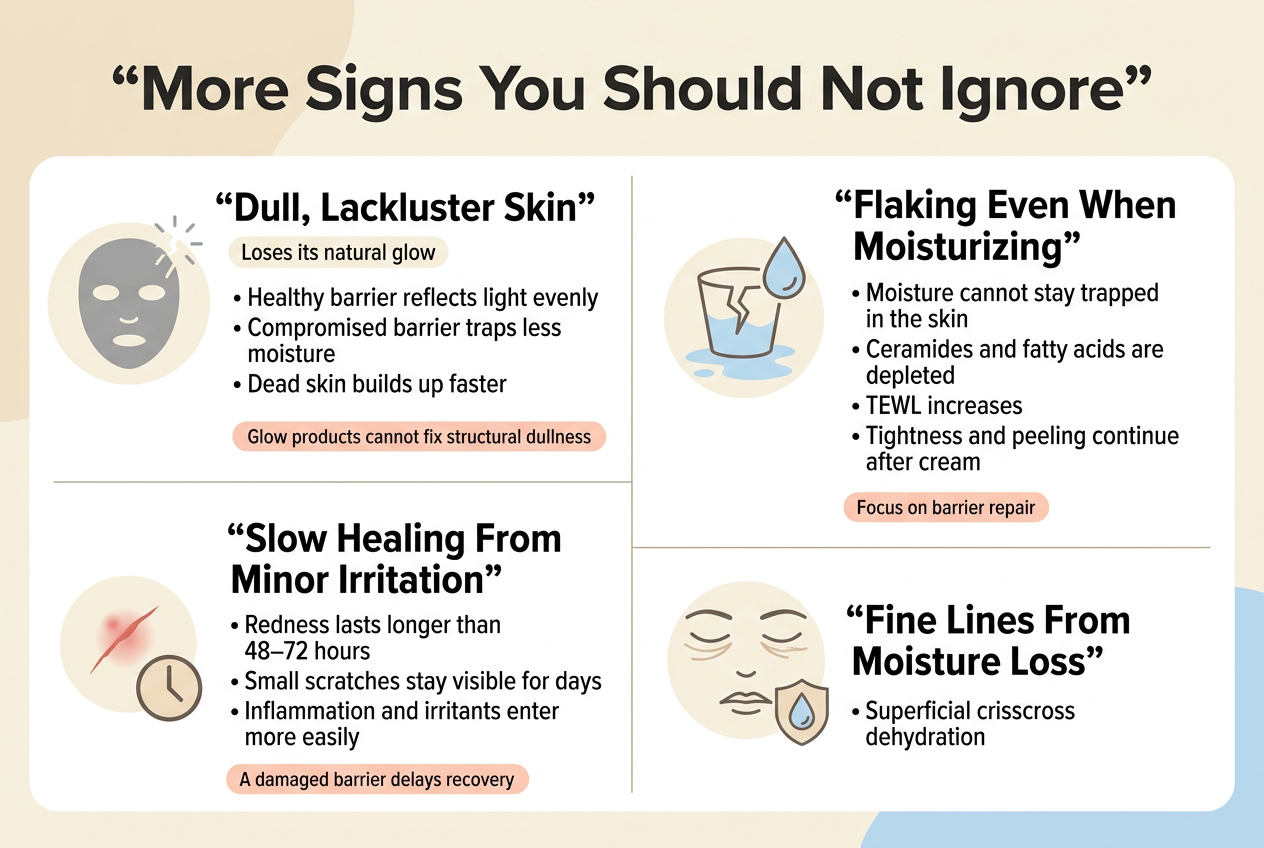
Dull, Lackluster Skin That Loses Its Natural Glow
That lit-from-within glow that everyone chases? It depends heavily on a healthy skin barrier. When your barrier is compromised, your skin loses its ability to retain moisture efficiently, and that hydration is exactly what gives skin its plump, reflective quality.
A damaged barrier causes light to scatter unevenly off the skin's surface instead of bouncing back in that smooth, luminous way. Dead skin cells build up faster than they shed, and the surface takes on a flat, almost grayish tone no matter how many brightening serums you layer on.
Why dullness is a red flag:
Healthy skin cells have a consistent, organized structure that reflects light well
A compromised barrier disrupts cell turnover and water retention simultaneously
No amount of highlighter fixes structural dullness at the skin level
If your skin looks tired even after a full night of sleep and plenty of water, your barrier likely needs attention before any glow-boosting product will actually work.
Flaking or Peeling Even When You Moisturize Regularly
This one frustrates a lot of people because it seems counterintuitive. You are moisturizing every single day, sometimes twice, and your skin is still flaking. What gives?
The issue is that a damaged skin barrier cannot hold onto the moisture you apply. Think of it like pouring water into a cracked cup. The moisturizer sits on top or evaporates quickly because the barrier structure that would normally trap water inside the skin is broken down.
What's actually happening beneath the surface:
Lipids like ceramides and fatty acids are depleted
The tight junction proteins between skin cells are weakened
Transepidermal water loss (TEWL) increases dramatically
Surface skin cells dry out and shed prematurely
| What It Looks Like | What It Actually Means |
|---|---|
| Flaking around nose and chin | Severe moisture loss in high-movement areas |
| Peeling after washing your face | Cleansers are stripping your remaining barrier |
| Dry patches that cream won't fix | Barrier too damaged to absorb or retain hydration |
| Skin feels tight five minutes after moisturizing | TEWL happening faster than moisture can absorb |
If regular moisturizer is not solving your flaking, switch your focus to barrier-repairing ingredients like ceramides, squalane, and fatty acids rather than just adding more hydration on top.
Skin That Takes Longer to Heal From Minor Irritation
A healthy skin barrier is basically your skin's first responder. When something irritates it, small scratches heal quickly, redness fades within a day or two, and minor breakouts resolve without leaving a mark. When that barrier is damaged, all of those timelines stretch out.
You might notice that a small pimple leaves a red mark that sticks around for weeks. A tiny scratch that would normally disappear overnight stays visible for days. A patch of redness from trying a new product lingers long after you have stopped using it.
Why healing slows down with a damaged barrier:
The barrier plays an active role in controlling inflammation signals
Damaged barrier skin is in a constant low-grade inflammatory state
Immune resources are already stretched dealing with ongoing barrier stress
Bacteria and irritants enter more easily, complicating the healing process
This is especially noticeable in people who have over-exfoliated or used strong active ingredients for too long without supporting their barrier. The skin gets stuck in a cycle of irritation and slow recovery that can feel almost impossible to break without stepping back and focusing on repair first.
Quick check: If your skin takes more than 48–72 hours to calm down after a reaction to a product or minor irritation, your barrier is almost certainly asking for help.
Visible Fine Lines Appearing Due to Moisture Loss
Fine lines are often blamed entirely on aging or sun exposure, and while those are real factors, a damaged skin barrier can fast-track their appearance in ways that have nothing to do with your age. When your barrier cannot hold water inside the skin effectively, the layers underneath start to dehydrate. Dehydrated skin loses its plumpness and elasticity, and that is when fine lines become much more visible.
These are not the same as deep wrinkles caused by collagen loss. Dehydration lines are typically:
Superficial and crisscross-patterned rather than following expression lines
More visible in certain lighting especially in dry or air-conditioned environments
Temporarily improved when you apply a rich moisturizer or face mist
Concentrated in thin-skin areas like under the eyes and around the mouth
The moisture-barrier connection explained simply:
Your skin is designed to stay hydrated from the inside out. The barrier, made up of lipids, proteins, and ceramides, acts like a seal. When that seal weakens, water escapes constantly. Even if you are drinking plenty of water, dehydrated skin cannot hold onto it because the seal is broken.
The result is skin that looks older than it is and feels tight and papery even right after moisturizing.
Signs these lines are barrier-related, not purely age-related:
They appeared suddenly or got noticeably worse after trying new products
They improve significantly with intensive barrier repair routines
Your skin also shows other barrier damage signs like sensitivity and redness
They look worse in winter or in heated, dry indoor environments
Addressing the barrier directly with ceramide-rich moisturizers, gentle cleansing, and avoiding harsh actives can visibly reduce these lines within a few weeks, which is a clear sign they were hydration-driven rather than structural.
Common Causes That Damage Your Skin Barrier
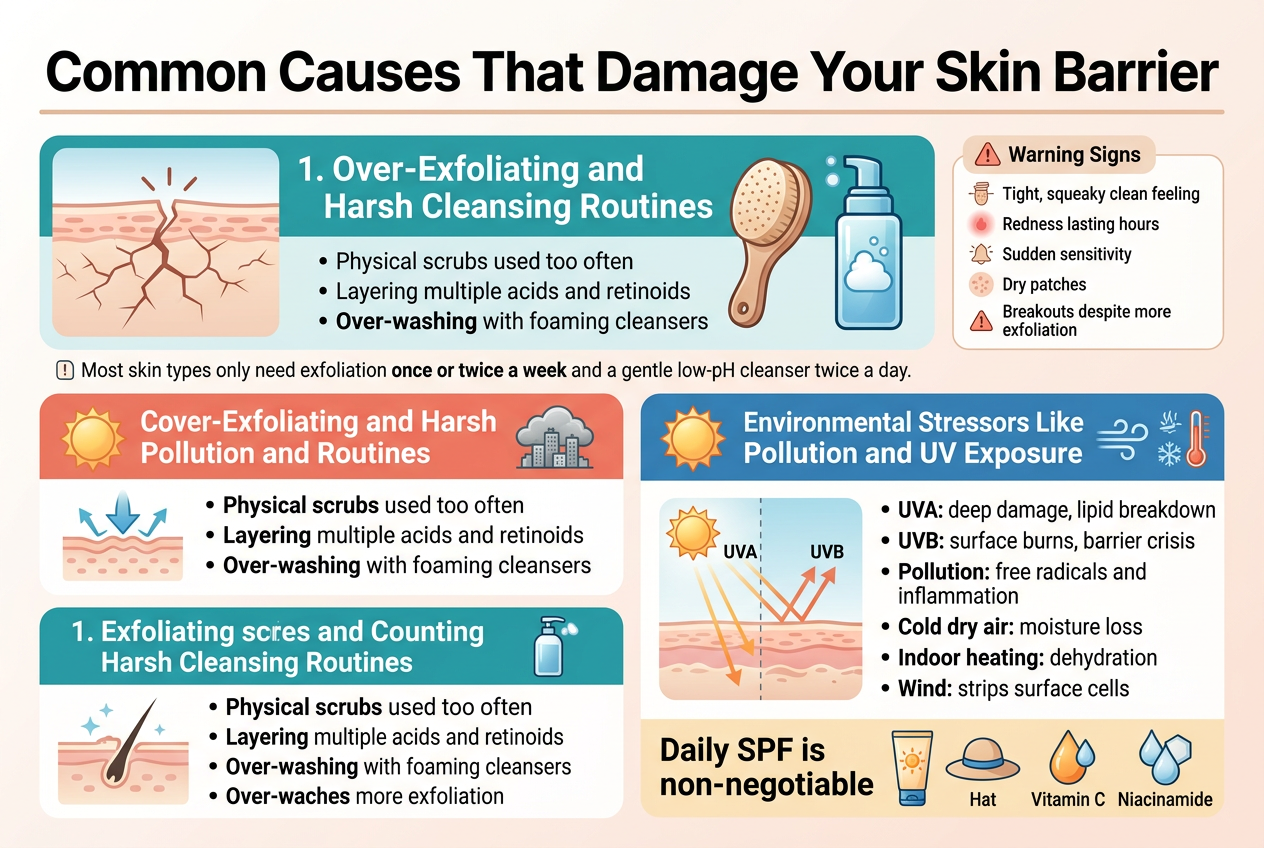
Over-Exfoliating and Harsh Cleansing Routines
This is probably the most common way people accidentally wreck their skin barrier and the frustrating part is that they're usually doing it with the best intentions.
Exfoliation feels good. It makes skin look brighter and smoother almost instantly, so it's tempting to reach for that scrub or acid toner more and more often. But your skin barrier is made up of living cells, lipids, and natural oils that need time to regenerate. When you strip them away too frequently, your skin simply cannot keep up with the repair process.
What over-exfoliation actually looks like in practice:
Physical scrubs used more than 2–3 times per week, especially ones with sharp, jagged particles like walnut shells or apricot kernels
Layering multiple chemical exfoliants for example, using a cleanser with salicylic acid, then a glycolic acid toner, then a retinol serum all in the same routine
Daily use of high-percentage AHAs or BHAs without any recovery days built in
Over-washing the face cleansing more than twice a day, especially with foaming cleansers that strip the skin's natural oils
Harsh cleansers are another massive culprit. Anything with a very high or very low pH throws off your skin's natural acid mantle, which sits around a pH of 4.5 to 5.5. When you use a cleanser that is too alkaline which many traditional bar soaps are you're essentially disrupting the entire ecosystem that keeps your barrier intact.
Signs you've gone too far with cleansing or exfoliation:
| Sign | What's Actually Happening |
|---|---|
| Tight, "squeaky clean" feeling after washing | Your natural oils have been completely stripped |
| Redness that lasts hours after your routine | Inflammation response from barrier disruption |
| Sudden sensitivity to products you've used before | Barrier is compromised, allowing deeper penetration of irritants |
| Dry patches appearing out of nowhere | Loss of lipids needed for moisture retention |
| Breakouts increasing despite more exfoliation | Skin is overproducing oil to compensate for dryness |
The fix starts with scaling back. Less really is more here. Most skin types only need exfoliation once or twice a week at most, and a gentle, low-pH cleanser used twice a day is all your skin really needs.
Environmental Stressors Like Pollution and UV Exposure
Your skin is fighting a constant battle against the outside world, and two of its biggest enemies are UV radiation and pollution particles both of which cause damage at a cellular level that you can't always see right away.
UV Radiation
The sun's UVA and UVB rays don't just cause sunburn. UVA rays penetrate deep into the dermis and break down collagen and elastin, but they also degrade the lipid structure of your skin barrier over time. Chronic, daily UV exposure even on cloudy days, even through windows gradually weakens the skin's ability to hold moisture and protect itself from irritants.
UVB rays, the ones responsible for burning, cause immediate surface damage that directly compromises barrier integrity. A sunburn is essentially your skin barrier in crisis mode.
Pollution and Free Radical Damage
Urban pollution is a skin barrier nightmare that doesn't get talked about enough. Tiny particles from car exhaust, smog, and industrial emissions known as particulate matter or PM2.5 are small enough to penetrate the outermost layers of the skin. Once inside, they:
Generate free radicals that destroy lipids in your skin barrier
Trigger inflammatory responses that weaken the barrier over time
Disrupt the microbiome living on your skin, which plays a key role in barrier health
Accelerate moisture loss by degrading the tight junctions between skin cells
Extreme Weather Conditions
Temperature extremes also matter. Cold, dry winter air pulls moisture from the skin, and indoor heating makes this even worse by reducing humidity levels dramatically. Hot, humid conditions can lead to excessive sweating that disrupts the acid mantle, and wind physically strips away the outermost skin cells.
| Environmental Stressor | Primary Damage Caused |
|---|---|
| UVA radiation | Degrades lipids, breaks down barrier structure over time |
| UVB radiation | Direct surface damage, burns that compromise barrier immediately |
| Air pollution (PM2.5) | Free radical damage, inflammation, microbiome disruption |
| Cold dry air | Moisture loss, increased transepidermal water loss (TEWL) |
| Indoor heating | Drops humidity, accelerates skin dehydration |
| Wind | Physical stripping of surface skin cells |
Daily SPF is non-negotiable for barrier health. Antioxidants like Vitamin C and niacinamide applied topically can help neutralize some of the free radical damage caused by pollution, but physical protection like hats and avoiding peak sun hours is equally important.
Using Products With Irritating Ingredients or High Fragrance
Walk into any drugstore or beauty retailer and the shelves are packed with products that smell amazing. That scent, in many cases, is the exact thing damaging your skin barrier.
Fragrance Both Synthetic and Natural
Fragrance is one of the leading causes of contact dermatitis and skin sensitization. What makes it tricky is that it covers a huge number of individual chemical compounds that can each cause reactions. When a product says "fragrance" or "parfum" on the label, that one word can represent anywhere from a handful to hundreds of different chemical components.
Natural fragrances like essential oils are not automatically safer. In fact, many essential oils including bergamot, lemon, lavender, and eucalyptus contain known allergens and irritants that can compromise barrier function, especially with regular use.
Other Common Barrier-Disrupting Ingredients
It's not just fragrance you need to watch out for:
High concentrations of alcohol (ethanol/SD alcohol) Used in many toners and serums, drying alcohols evaporate quickly and take your skin's natural oils with them
Sodium lauryl sulfate (SLS) A surfactant found in many foaming cleansers that is notoriously harsh on the barrier
Certain preservatives Methylisothiazolinone (MI) and methylchloroisothiazolinone (MCI) are common sensitizers that show up in rinse-off and leave-on products
High concentrations of active ingredients Retinoids, vitamin C, AHAs, and BHAs are all beneficial, but at high percentages or when used together, they can overwhelm a compromised barrier
Menthol and camphor Often added for a "cooling" sensation, they can cause significant irritation and sensitization over time
How to Read Labels More Effectively
The ingredient list on skincare is ordered from highest to lowest concentration. If fragrance or alcohol appears in the first five or six ingredients, there's a significant amount of it in the product. If it appears near the end, the concentration is lower though for known sensitizers, even small amounts can cause problems in sensitive or already damaged skin.
A practical approach:
Look for "fragrance-free" rather than "unscented" unscented products can still contain masking fragrances
Introduce new actives one at a time so you can identify if something is causing a reaction
Patch test on the inside of your wrist or behind your ear before applying to your face
Give your skin a "simplified routine" period when you suspect product damage strip back to just a gentle cleanser, a simple moisturizer, and SPF
✨ Explore Skin‑Friendly Essentials at PureOnSkin
If you’re ready to support your skin barrier beyond your daily routine, explore our curated collection of soft, breathable clothing and gentle home essentials designed with your skin’s comfort in mind. From ultra‑smooth pillowcases to irritation‑free fabrics, every item is crafted to help your skin stay calm, protected, and glowing.
👉 Shop our skin‑friendly essentials
Give your skin the comfort it deserves starting with the things you use every day.
Poor Diet, Stress, and Lack of Sleep Weakening Skin Defenses
Skincare products and external habits matter a lot, but your skin barrier is also a reflection of what's happening inside your body. Diet, mental health, and sleep quality all directly impact how well your skin can protect and repair itself.
The Role of Nutrition
Your skin barrier is largely made up of ceramides, fatty acids, and cholesterol and your body needs specific nutrients to produce and maintain all of them.
Key nutrients that directly support barrier health:
| Nutrient | Role in Skin Barrier Health | Food Sources |
|---|---|---|
| Omega-3 fatty acids | Reinforce the lipid layer, reduce inflammation | Fatty fish, flaxseeds, walnuts, chia seeds |
| Zinc | Supports skin repair and immune response | Pumpkin seeds, meat, shellfish, legumes |
| Vitamin E | Antioxidant that protects barrier lipids | Sunflower seeds, almonds, avocado |
| Vitamin C | Essential for collagen synthesis | Citrus fruits, bell peppers, strawberries |
| Vitamin A | Regulates skin cell turnover and repair | Liver, sweet potato, leafy greens |
| Biotin (B7) | Supports fat metabolism needed for skin lipids | Eggs, nuts, whole grains |
A diet that's heavy in processed foods, refined sugar, and alcohol tends to drive systemic inflammation. Chronic inflammation is genuinely destructive to your skin barrier because it breaks down the proteins and lipids that hold everything together. Sugar in particular can trigger glycation a process where sugar molecules bind to collagen and skin proteins, making them stiff, damaged, and less functional.
Chronic Stress and Cortisol
When you're stressed, your body releases cortisol. In small bursts, that's a normal response. But when stress is ongoing and cortisol stays elevated, it actively suppresses skin barrier function in a few ways:
Reduces ceramide production ceramides are the "mortar" that holds your skin cells together, and cortisol interferes with the enzymes that produce them
Increases transepidermal water loss (TEWL) stressed skin loses moisture much faster than calm skin
Triggers inflammation cortisol dysregulation leads to increased production of inflammatory cytokines that break down barrier integrity
Worsens existing conditions eczema, psoriasis, and rosacea all flare significantly during periods of high stress, because all three involve a compromised barrier as part of their pathology
This is why your skin often looks dull, reactive, and dry during particularly stressful periods in your life it's not coincidental, it's physiological.
Sleep Deprivation
Sleep is when your skin does most of its repair work. Skin cell turnover accelerates at night, collagen synthesis is at its peak during deep sleep, and the immune processes that help maintain barrier function are most active while you're resting.
When sleep is cut short or quality is poor, all of that repair work gets interrupted. Studies have shown that even a few nights of poor sleep measurably increase TEWL and reduce the skin's ability to recover from barrier disruption. People who consistently sleep less than six hours show significantly more signs of premature skin aging and reduced barrier competency compared to those getting seven to nine hours.
Practical steps that genuinely help:
Eat a diet rich in anti-inflammatory foods Mediterranean-style eating patterns have strong support for reducing systemic inflammation
Address stress through consistent habits exercise, therapy, time outdoors, and mindfulness all reduce cortisol over time
Prioritize sleep quality, not just duration a cool, dark room, consistent bedtime, and limiting blue light before bed all make a measurable difference
Stay well hydrated even mild dehydration impairs the skin's ability to maintain its barrier and recover from daily damage
How to Repair Your Skin Barrier Quickly and Effectively
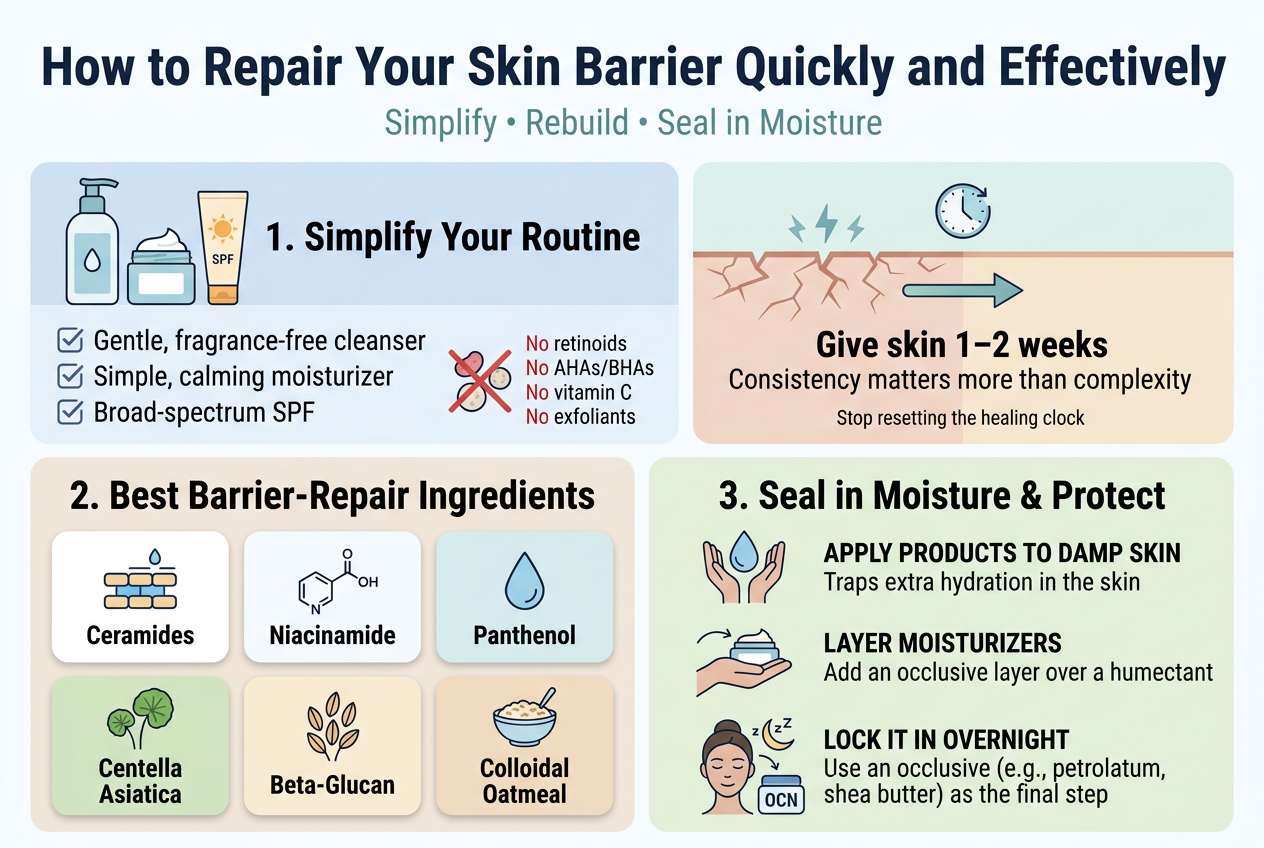
Simplify Your Routine to Give Skin Time to Recover
When your skin barrier is compromised, the instinct to throw every serum and treatment at it is completely understandable but it's usually the worst thing you can do. A damaged barrier is already overwhelmed and reactive. Piling on actives like retinoids, AHAs, BHAs, and vitamin C at this point is like continuing to scrub a fresh wound. You need to back off and let your skin breathe.
Strip your routine down to the bare essentials:
A gentle, fragrance-free cleanser nothing foaming or stripping
A simple, calming moisturizer focused on barrier repair
Broad-spectrum SPF during the day (sun exposure worsens barrier damage significantly)
That's it. No exfoliants. No strong actives. No multiple-step layering systems. Give your skin at least one to two weeks of this simplified approach before reintroducing anything else.
Why does this work?
Your skin's natural repair process runs on its own timeline. When you keep introducing potentially irritating ingredients, you keep resetting the clock on that healing process. A simpler routine removes the obstacles so your skin can actually do its job.
Here's a practical way to think about your simplified routine:
| Step | What to Use | What to Avoid |
|---|---|---|
| Cleanse | Gentle, low-pH, fragrance-free cleanser | Foaming cleansers, scrubs, micellar water with alcohol |
| Treat | Calming serum with centella or panthenol (optional) | Retinoids, AHAs, BHAs, vitamin C, benzoyl peroxide |
| Moisturize | Ceramide-rich or barrier-repair cream | Fragranced lotions, products with essential oils |
| Protect | Mineral SPF with zinc oxide or titanium dioxide | Chemical sunscreens if skin is highly reactive |
Stick with this stripped-back approach consistently. Consistency during the recovery phase matters far more than adding complexity.
Choose Barrier-Repairing Ingredients Like Ceramides and Niacinamide
Not all skincare ingredients are created equal when it comes to barrier repair. Some actively rebuild what's been lost, while others just sit on top and do very little. Knowing which ones actually move the needle makes a real difference in how fast your skin recovers.
Ceramides
Ceramides are arguably the most important ingredient for barrier repair, full stop. They're lipids fats that naturally exist in your skin's outer layer, acting like the mortar between bricks. When your barrier is damaged, ceramide levels drop, and moisture starts escaping. Replenishing them topically has been shown in clinical research to meaningfully restore barrier function.
Look for products that list ceramide NP, ceramide AP, ceramide EOP, or a blend of multiple ceramides. Products that combine ceramides with cholesterol and fatty acids (like linoleic acid) are even more effective because they mimic the natural lipid ratio found in healthy skin.
Niacinamide
Niacinamide (vitamin B3) is one of the most versatile barrier-supporting ingredients out there. It stimulates the production of ceramides within the skin itself, helps regulate sebum, reduces redness and inflammation, and strengthens the overall skin barrier over time. A concentration of 4–5% is effective for most people without causing irritation and it plays nicely with almost everything else in your routine.
Panthenol (Vitamin B5)
Panthenol is a humectant and skin-soother that draws moisture into the skin and helps with barrier recovery. It's particularly good for calming irritation and redness that comes along with a compromised barrier. You'll find it in many barrier-repair moisturizers as a supporting ingredient alongside ceramides.
Centella Asiatica
Also known as cica, centella asiatica has become a go-to ingredient for damaged and sensitized skin for good reason. Its active compounds madecassoside, asiaticoside, and asiatic acid help reduce inflammation, speed up skin repair, and calm reactive skin. If your barrier damage has come with a lot of redness or sensitivity, look for products that feature centella prominently.
Beta-Glucan
Beta-glucan is a lesser-known but highly effective ingredient derived from oats or yeast. It soothes the skin, reduces inflammation, and has been shown to support wound healing and barrier function. It's an excellent option for very reactive or sensitized skin that can't tolerate more common actives.
Quick Reference: Best Barrier-Repairing Ingredients
| Ingredient | Primary Benefit | Best For |
|---|---|---|
| Ceramides | Directly replenishes lost lipids | All damaged skin types |
| Niacinamide | Boosts ceramide production, reduces redness | Oily, combination, sensitive skin |
| Panthenol | Humectant, soothes irritation | Dry, sensitized, reactive skin |
| Centella Asiatica | Anti-inflammatory, accelerates repair | Red, inflamed, stressed skin |
| Beta-Glucan | Calms skin, supports healing | Very reactive or sensitized skin |
| Colloidal Oatmeal | Relieves itch and irritation | Eczema-prone, itchy, irritated skin |
When shopping for barrier-repair products, ingredients like fragrance, alcohol denat, essential oils, and synthetic dyes are red flags avoid them during recovery, as they can undo the work you're putting in.
Lock In Moisture With the Right Occlusives and Emollients
Even the best barrier repair ingredients can only do so much if moisture keeps evaporating from your skin throughout the day. That's where occlusives and emollients come in and understanding the difference between the two changes how you build your routine.
What Are Occlusives?
Occlusives are ingredients that create a physical seal on the surface of your skin, slowing down transepidermal water loss (TEWL). When your barrier is damaged, TEWL skyrockets that's why damaged skin feels perpetually tight, dry, and uncomfortable. An occlusive helps plug that gap while your barrier repairs itself underneath.
Common occlusives and how they compare:
| Occlusive | Texture | Best For |
|---|---|---|
| Petrolatum (Vaseline) | Very thick | Severely dry or cracked skin, slugging at night |
| Dimethicone | Lightweight, silky | Oilier skin types, daytime use |
| Shea Butter | Rich, creamy | Dry to very dry skin |
| Squalane | Lightweight oil | Most skin types, layering |
| Lanolin | Very occlusive | Extremely dry, compromised skin (avoid if allergic to wool) |
| Beeswax | Medium weight | Lip and targeted areas |
Petrolatum (the main ingredient in plain Vaseline) is one of the most effective occlusives ever studied. It's non-comedogenic for most people despite the thick texture, and it's been used in clinical wound care for decades. The "slugging" trend applying a thin layer of petrolatum as the last step in your nighttime routine became popular for good reason. It's especially helpful for people with severely compromised barriers.
What Are Emollients?
Emollients are different from occlusives. Rather than sitting on top of your skin as a seal, they fill in the gaps between skin cells, smoothing and softening texture and improving the way your skin feels and functions. They work within the upper layers of the skin to make it more pliable and comfortable.
Examples of great emollients for barrier repair:
Squalane lightweight, non-greasy, and deeply compatible with skin's natural oils
Linoleic acid (found in rosehip, sunflower, and hemp seed oils) particularly important because damaged skin is often linoleic acid-deficient
Fatty alcohols like cetyl alcohol and stearyl alcohol often misunderstood as drying, these are actually excellent emollients found in many rich creams
Shea butter both emollient and occlusive properties, making it a great multitasker
How to Layer Them Correctly
The order in which you apply humectants, emollients, and occlusives makes a meaningful difference in how well they work:
Humectant first Apply a hydrating serum or toner containing hyaluronic acid or glycerin to damp skin. This draws water into the skin.
Emollient next Follow with a moisturizer that contains emollient ingredients to soften and fill gaps in the skin surface.
Occlusive last Seal everything in with an occlusive layer, especially at night. Even a thin layer of petrolatum or a balm-style moisturizer on top of your regular cream works well.
This layering system keeps water where it belongs inside your skin and gives your barrier the best possible environment to heal.
A note on nighttime vs. daytime:
At night, you can lean into richer occlusives without worrying about how your skin looks or feels under makeup. During the day, lighter emollients and dimethicone-based products tend to be more comfortable and practical under SPF and makeup. Both serve an important role in your recovery routine.
Best Habits to Keep Your Skin Barrier Strong Long-Term
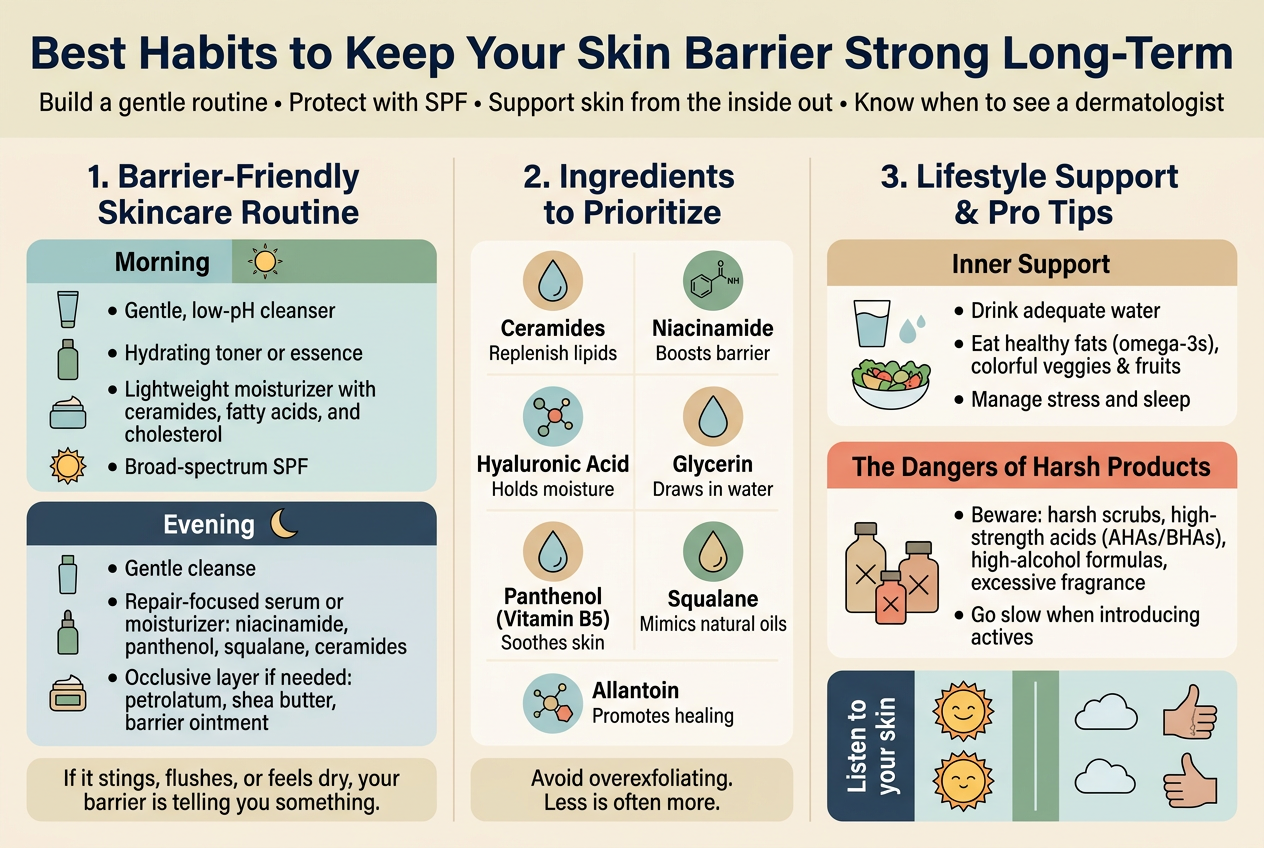
Build a Gentle Skincare Routine That Respects Your Barrier
Your skincare routine either works for your barrier or quietly works against it every single day. The goal is to keep things simple, effective, and kind to your skin not to throw every active ingredient at your face and hope for the best.
What a Barrier-Friendly Routine Actually Looks Like
Morning Routine:
Gentle, low-pH cleanser avoid anything that leaves your skin feeling squeaky clean or tight. That sensation means you've stripped away protective oils.
Hydrating toner or essence look for ingredients like hyaluronic acid, glycerin, or beta-glucan to draw moisture into the skin.
Lightweight moisturizer choose one with ceramides, fatty acids, and cholesterol. These three work together because they closely mimic your skin's own lipid structure.
Broad-spectrum SPF non-negotiable (more on this below).
Evening Routine:
Gentle cleanse double cleansing with a cleansing oil or balm followed by a mild water-based cleanser works well for those who wear SPF or makeup.
Repair-focused serum or moisturizer nighttime is when your skin does most of its rebuilding, so lean into barrier-repairing ingredients like niacinamide, panthenol, squalane, and ceramides.
Occlusive layer if needed a thin layer of petrolatum, shea butter, or a dedicated barrier ointment on very dry or compromised areas locks in everything underneath.
Ingredients to Prioritize
| Ingredient | What It Does for Your Barrier |
|---|---|
| Ceramides | Replenish the lipids that hold skin cells together |
| Niacinamide | Boosts ceramide production and reduces inflammation |
| Hyaluronic Acid | Pulls moisture into the skin and supports plumpness |
| Glycerin | A humectant that keeps the surface hydrated |
| Panthenol (Vitamin B5) | Soothes, heals, and helps retain moisture |
| Squalane | Mimics skin's natural oils without clogging pores |
| Allantoin | Calms irritation and supports skin cell renewal |
What to Avoid When Your Barrier Needs Support
Harsh physical scrubs the kind with rough, jagged particles that create micro-tears
High-concentration acids used too often AHAs, BHAs, and retinoids are great in the right context, but overuse breaks down the barrier faster than it can repair itself
Alcohol-heavy products denatured alcohol evaporates quickly and takes moisture with it
Fragrance (synthetic or natural) a leading cause of contact dermatitis and barrier irritation, especially in sensitive or compromised skin
Hot water washing your face with very hot water dissolves the protective lipid layer
A good rule of thumb: if your skin feels calm, soft, and comfortable after using a product, it's earning its place in your routine. If it stings, flushes, or feels dry, your barrier is telling you something worth listening to.
Protect Your Skin Daily With Broad-Spectrum SPF
UV radiation is one of the most consistent and well-documented sources of barrier damage and it's happening even on cloudy days or when you're sitting near a window. UVA rays in particular penetrate deep into the skin and break down collagen, damage the lipid structure, and trigger inflammation that weakens barrier function over time.
Choosing the Right SPF for Barrier Health
Not all sunscreens are created equal when it comes to barrier support. Here's what to look for:
SPF 30 minimum blocks about 97% of UVB rays. SPF 50 blocks roughly 98%. Go higher if you're spending extended time outdoors.
Broad-spectrum label this means it protects against both UVA and UVB radiation.
✨ Explore Skin‑Friendly Essentials at PureOnSkin
If you’re ready to support your skin barrier beyond your daily routine, explore our curated collection of soft, breathable clothing and gentle home essentials designed with your skin’s comfort in mind. From ultra‑smooth pillowcases to irritation‑free fabrics, every item is crafted to help your skin stay calm, protected, and glowing.
👉 Shop our skin‑friendly essentials
Give your skin the comfort it deserves starting with the things you use every day.
Mineral vs. chemical formulas:
| Type | How It Works | Best For |
|---|---|---|
| Mineral (zinc oxide, titanium dioxide) | Sits on top of skin and reflects UV | Sensitive, reactive, or compromised skin |
| Chemical (avobenzone, octinoxate) | Absorbs UV and converts it to heat | Those who prefer lightweight, invisible finish |
| Hybrid | Combines both | Balance of protection and cosmetic feel |
For damaged or sensitive skin, mineral sunscreens tend to be less irritating because they don't require chemical absorption into the skin.
Habits That Make Daily SPF Actually Happen
Apply SPF as the last step in your morning routine, after moisturizer
Use about a teaspoon for your face and neck most people apply far less than needed
Reapply every two hours if you're outdoors or sweating
Don't skip it in winter UV index is lower but UVA rays are still present year-round
Look for moisturizers with SPF built in only if you're disciplined about using enough product otherwise, layer a dedicated sunscreen on top
Skipping SPF while trying to repair your barrier is like patching a hole in a roof while leaving a window open. Everything you're doing inside your routine gets undermined by unprotected UV exposure outside.
Stay Hydrated and Support Skin Health From the Inside Out
Your skin barrier isn't just shaped by what you put on it it's heavily influenced by what's happening inside your body. Hydration, nutrition, sleep, and stress levels all play a direct role in how resilient and functional your barrier stays day to day.
Hydration and Water Intake
Severe dehydration does show up in the skin dullness, tightness, and reduced elasticity are all signs that your body isn't getting enough water. The relationship between water intake and skin barrier function isn't as straightforward as "drink eight glasses and your skin glows," but consistent, adequate hydration supports circulation, cellular turnover, and the skin's own moisture-regulation process.
Practical tips:
Aim for around 2–2.5 liters of water daily (more if you're active or in a hot climate)
Herbal teas and water-rich foods like cucumber, watermelon, and leafy greens count toward your intake
Limit excessive caffeine and alcohol, both of which have a dehydrating effect on the body
Nutrition for a Stronger Skin Barrier
The skin barrier is made up of lipids and those lipids come from what you eat. Deficiencies in certain fatty acids, vitamins, and minerals directly affect how well your barrier is built and maintained.
| Nutrient | Where to Get It | How It Helps the Barrier |
|---|---|---|
| Omega-3 fatty acids | Salmon, sardines, flaxseeds, walnuts | Reduces inflammation, supports lipid production |
| Vitamin E | Almonds, sunflower seeds, avocado | Antioxidant protection, helps maintain moisture |
| Vitamin C | Bell peppers, citrus fruits, kiwi | Essential for collagen synthesis |
| Zinc | Pumpkin seeds, legumes, shellfish | Supports skin repair and reduces inflammation |
| Biotin (Vitamin B7) | Eggs, nuts, sweet potato | Plays a role in fatty acid metabolism for the skin |
| Healthy fats | Olive oil, avocado, nuts | Supports the lipid matrix of the barrier |
Sleep and Stress Management
This part often gets overlooked, but it's huge. During deep sleep, your body ramps up repair processes including skin cell renewal and barrier restoration. Chronic poor sleep increases cortisol levels, which breaks down collagen and disrupts the skin's protective function.
High stress does the same thing. Elevated cortisol signals inflammation, impairs wound healing, and can trigger or worsen conditions like eczema and psoriasis all of which are rooted in a compromised barrier.
Small but real changes that help:
Aim for 7–9 hours of quality sleep consistently
Try to wind down with a screen-free period before bed
Incorporate stress management practices that actually work for you whether that's walking, journaling, breathing exercises, or just genuinely resting
Consider that your skin's behavior often mirrors what's going on inside your body persistent flare-ups without an obvious topical cause are worth looking at from a whole body perspective
Know When to See a Dermatologist for Professional Help
Home routines and lifestyle changes go a long way but there are situations where your skin is telling you it needs more than what's available over the counter. Recognizing those moments and acting on them early can save you months of frustration and prevent a manageable issue from becoming a chronic one.
Signs You Should Book an Appointment
Persistent redness, rash, or inflammation that doesn't improve after 4–6 weeks of gentle care
Severe dryness or cracking that isn't responding to barrier repair products
Itching that disrupts sleep this is a quality of life issue that deserves professional attention
Suspected eczema, psoriasis, or rosacea these conditions affect the barrier at a structural level and often need prescription treatment
Burning or stinging with nearly every product this level of reactivity can point to contact dermatitis or another underlying condition
Any new, changing, or unusual skin lesions always worth having a professional look at anything that concerns you
What a Dermatologist Can Offer That You Can't DIY
Patch testing to identify specific allergens or irritants that are damaging your barrier
Prescription topicals like low-potency corticosteroids, calcineurin inhibitors (like tacrolimus), or prescription-strength ceramide formulations
Diagnosis of underlying conditions like atopic dermatitis or seborrheic dermatitis, which have specific treatment protocols
Guidance on safely reintroducing actives like retinoids or acids after the barrier has healed
Access to advanced treatments like light therapy for inflammatory conditions affecting the barrier
How to Make the Most of Your Dermatology Appointment
Come with a list of every product you're currently using including cleansers, moisturizers, treatments, and SPF
Note when your symptoms started and whether anything seems to trigger or worsen them
Be honest about your routine, including how often you exfoliate, any recent product changes, and lifestyle factors like stress or diet
Ask about a step-by-step plan for rebuilding your barrier, not just treating the current flare
Seeing a dermatologist isn't a last resort it's a smart move any time your skin isn't responding the way you'd expect or when your quality of life is being affected. Skin conditions are medical conditions, and you deserve proper care.
Conclusion
Your skin barrier works hard every day to keep moisture in and irritants out and when it breaks down, your skin lets you know. From redness and tightness to breakouts that won't quit, the signs are hard to miss once you know what to look for. The good news? With the right products, gentler habits, and a little patience, your skin barrier can absolutely bounce back.
Start simple cut back on harsh actives, load up on a good moisturizer, and give your skin the breathing room it needs. And once it heals, stick to those protective habits to keep it strong. Your skin does a lot for you, so a little extra care goes a long way.
